
What Does Therapeutic Access Look Like?
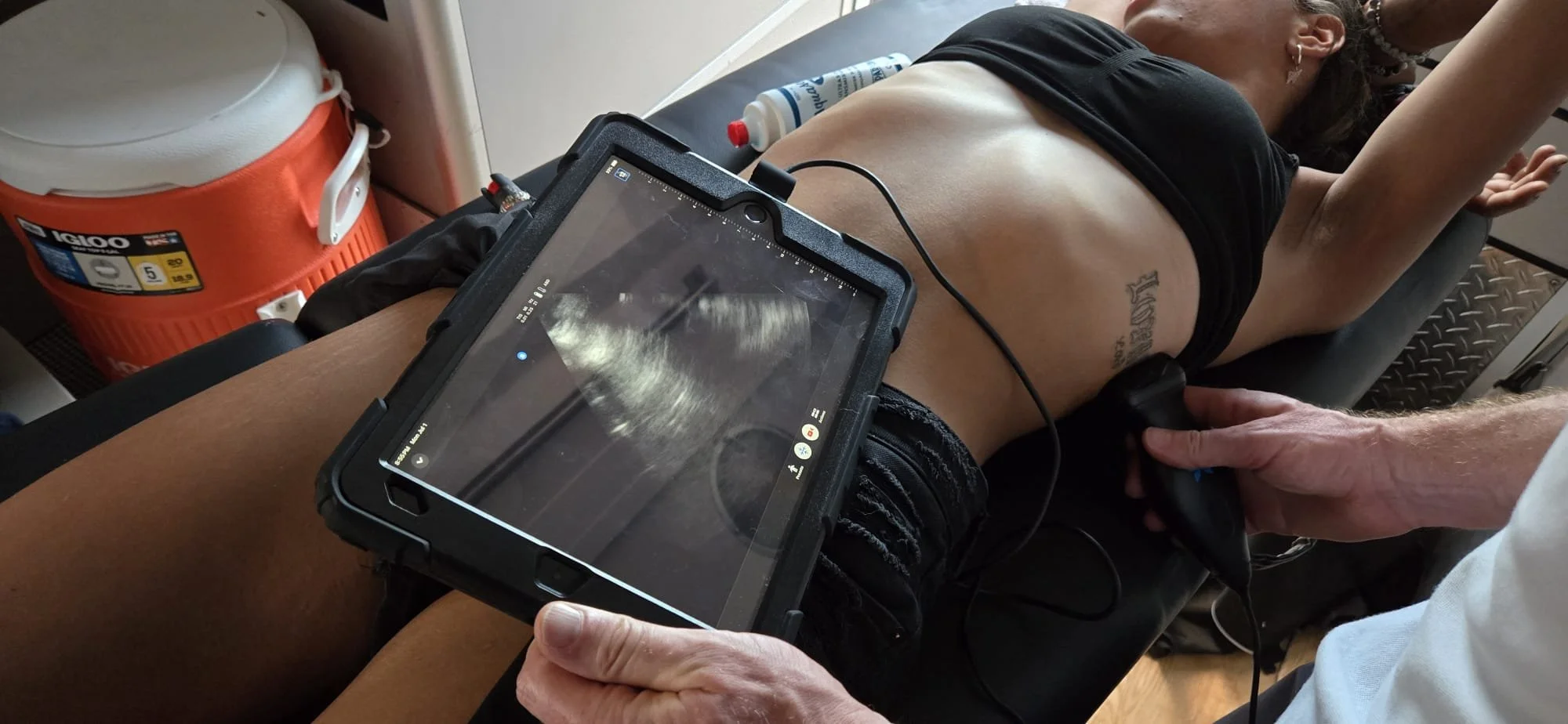
I took this photograph in downtown Salt Lake City, where many people are living with homelessness and substance use.
She was 18 at the time. It was the middle of summer, and she'd had a bad cough for several weeks that kept getting worse. She was smoking a lot of fentanyl then, and she was pretty sick. So we did an ultrasound of her lungs on the spot to check for pneumonia.
An ultrasound like that takes a few minutes. Whenever I'm doing an ultrasound or cleaning a wound or anything else that takes a little time, I talk with the person in front of me. I ask about their life, their story, and how they got to where they are now.
Often that opens a door. People start talking candidly about their lives, and for a little while they feel heard, seen, and understood.
To me, that's what therapeutic access is. It means bringing a healing experience to someone where they are, and inviting them into it. Medical care is the reason we meet. But the conversation that happens during that care is often where healing starts.
T
hat conversation can happen after treatment, but it can also happen during it. For people who are being exploited, who often have good reasons not to trust healthcare, that combination is powerful. It gives them a reason to come back, and a reason to keep engaging in their own healing.
- Drew
