
What Does Exploitation Look Like?
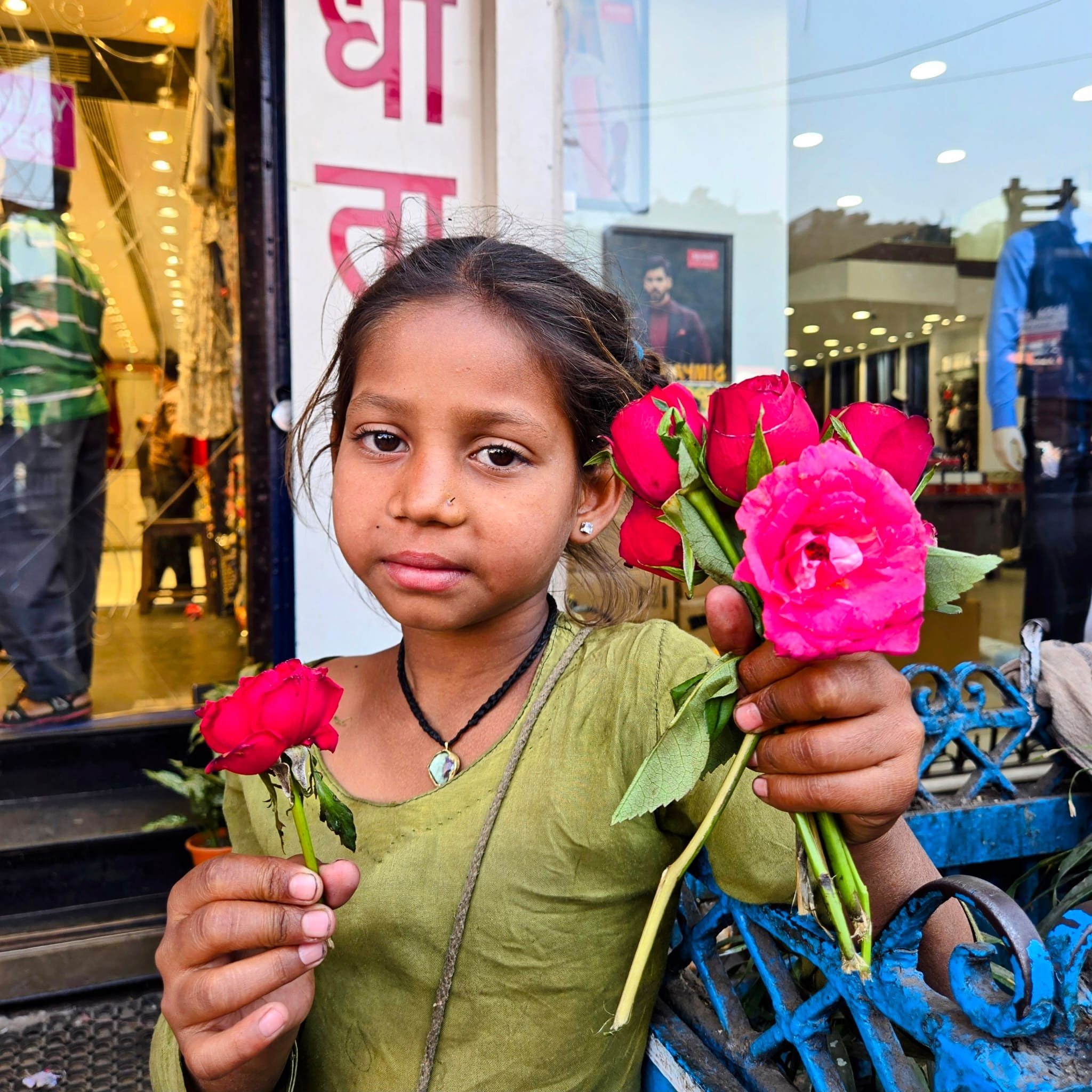
I took this photograph near a market in India. This girl was moving through the crowd selling roses. She was very dirty, and it was clear she was living on the street. When I asked, she let me take her picture.
Afterward, I spent a long time reading about begging and other coercive ways children are made to earn money on the streets in India. What I found is that it is common for children without a stable home to be used this way: sent out to beg, or to put on a face for tourists and wealthy passersby, with the money flowing back to a larger begging ring.
I can't know this girl's story for certain. But everything I saw that day fit that pattern, and I'm confident she was part of it.
That moment changed how I understood exploitation. At the time, I had been working almost entirely with people experiencing sexual exploitation, and I think I had quietly let that define the word for me. Standing in that street, I saw it more clearly. Exploitation means someone is being taken advantage of, at their own expense, in a way that damages them and leaves trauma behind. It doesn't need a brothel or a work camp to be real.
When most people hear "human trafficking," they picture sex trafficking or forced labor. Those are real and serious. But exploitation can also look much more ordinary, like a child selling flowers to strangers while someone else keeps the money.
When I look at this photograph, I think about her. I wonder what her days are like, who she answers to at night, and what it costs her to keep showing up on that street. And I think about all the other situations people end up in that are exploitative, traumatic and damaging, but that we don't always recognize, because they don't match the picture in our heads.
She taught me that exploitation rarely looks the way we expect it to. Sometimes it looks like a little girl holding out a rose, hoping someone will buy one. Learning to see that is where healing can begin.
- Drew
